Pem's Conversion to Judaism
City of GodPem's Conversion to Judaism is the central religious transformation of E. L. Doctorow's City of God, the act by which the Episcopal priest Thomas Pemberton—known throughout as Pem—turns from the priesthood of St. Timothy's Episcopal Church to the embrace of Judaism, a journey that carries him from the theft of his church's brass cross to a wedding prayer that indicts God Himself. The conversion is not a simple change of affiliation but a profound theological crisis, one that unfolds against the backdrop of a stolen cross, a synagogue roof, and the lingering shadow of the Holocaust. It is the novel's most direct answer to the question of how a thinking, doubting modern believer can remain religious at all, and it culminates in Pem's own words: "I will soon be a Jew."
The Crisis of Faith and the Stolen Cross
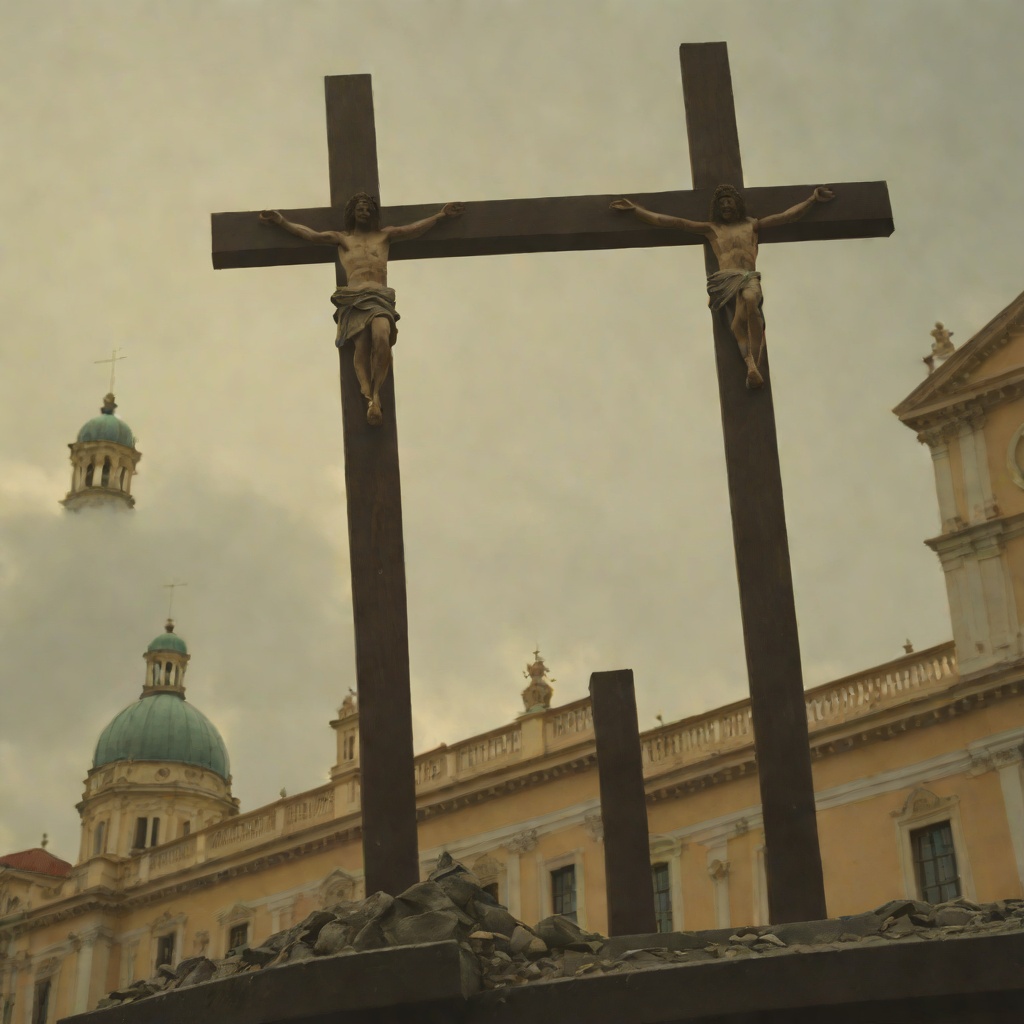
Pem's path to conversion begins long before he meets Sarah Blumenthal, rooted in a crisis of faith that surfaces in his own sermons. In a draft for a sermon, he recalls a hospital scene where "good and righteous folk" pray at the bedside of their minister, and he longs to share their trustfulness—yet he immediately questions: "Must faith be blind? Why must it come of people's need to believe?" This tension between longing and doubt defines his spiritual state. The crisis is dramatized by the theft of the eight-foot hollow brass cross of St. Timothy's, which Pem discovers lying flat on the roof of the Synagogue of Evolutionary Judaism, its transverse parallel to the building's front, its upright pressed against the granite pediment. The detective's dismissive remark—that the cross is "scrap metal" with "zilch" book value, while a Torah might bring five thousand dollars—underscores the cross's symbolic rather than material worth, and Pem's own search for it becomes a search for meaning. The cross's appearance on the synagogue roof, tarnished and shining in the autumn sun, is the novel's central mystery, and Pem's engagement with it draws him into the Jewish world.
The Synagogue of Evolutionary Judaism and Sarah Blumenthal
Pem's introduction to the Synagogue of Evolutionary Judaism comes through Rabbi Joshua Gruen, who leads him up an iron ladder to the flat roof where the cross lies. There Pem meets Sarah Blumenthal, Joshua's wife and co-rabbi, a woman with "high cheekbones, no cosmetics, needs none," who is also an assistant rabbi at Temple Emanuel. The synagogue itself is a converted parlor, with an Ark at one end, a platform table for reading the Torah, shelves of prayer books, and rows of bridge chairs—a modest, intellectual space. Pem is immediately struck by Sarah, and the thought crosses his mind: "What if Trish wore the collar, celebrated the Eucharist with me?"—a reference to his former lover Trish vanden Meer, whose absence haunts him. The synagogue's approach, as Pem later learns, is to subject Jewish teaching to modern scholarship, separating the inessential from the crucial, and its weekly Sabbath service includes a rabbinically directed seminar rather than a sermon. Pem finds these evenings fascinating, and he is surprised by his own engagement, noting that the congregation includes a professor of Comparative Religion at Columbia, a State Supreme Court judge, and an elderly man carried up the stairs by his son. The documentary hypothesis of biblical authorship—the J, E, P, and D sources—becomes a recurring topic, and Pem, with his divinity school background, finds much that is familiar.
The Decision to Convert and the Conversion Studies
Pem's decision to convert is intertwined with his love for Sarah, but he insists it is not solely for her. When asked directly, "Pem, tell me truly, how much does your converting have to do with wanting to marry Sarah?" he answers, "How can I answer that? She has everything to do with it. And nothing. I don't like the question." The ambiguity is deliberate: Sarah is both the catalyst and the occasion, but the conversion is also a genuine theological quest. Pem and Sarah agree that his preconversion studies should be conducted by a rabbi other than her—he meets weekly with a former colleague of hers at Temple Emanuel. Pem is profoundly grateful to have been circumcised as an infant, joking, "Jesus, that would be one hell of a test of the faith." He also insists on undergoing the mikvah, the ritual bath, despite its being less assiduously held by the Reformed, saying, "In front of three witnessing rabbis you duck yourself naked in the pool, and when you come up you're reborn as a son of Abraham. As a dissolving Christian I find that comforting. Has a nice Baptist quality." The phrase "dissolving Christian" captures his sense of his own faith's erosion.
The Wedding and the Wedding Prayer
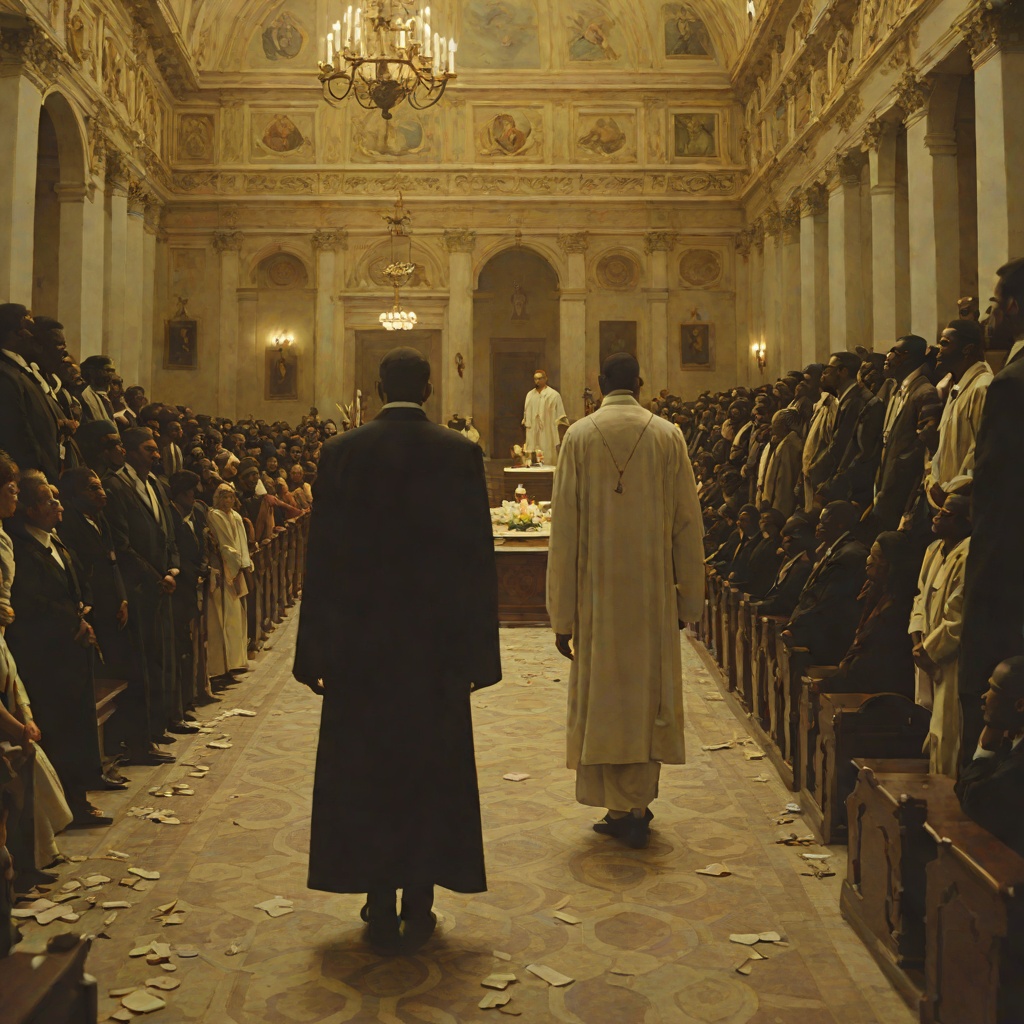
Pem and Sarah do not wait for the completion of his conversion studies to marry, Sarah's progressivism "coming out to meet him halfway." Pem tells the narrator that he has "never felt as completely, wholly Christian in his life as he does now, studying to be a Jew"—a paradox that the narrator warns him not to repeat to others. At the wedding, Pem rises to grasp the cordless microphone, his double-breasted blazer hanging open, his tie loosened, his forehead "triumphantly cowlicked." He begins, "Friends, I will not speak of my happiness, of my prayerful thanks to the Lord, may His name be blessed, that my dear love Sarah Blumenthal has found me worthy of her attention. You can believe that I will passionately live what's left of my life to earn what she has given me. I will soon be a Jew. I will find the joy of a hallowed life." But the speech turns into his "final act as a Christian and an ex–Christian priest," a prayer that addresses God directly: "Dear Lord, blessed be Your name, I speak to you in one of our intonative systems of clicks and grunts, glottal stops and trills." He catalogues the "monstrously evil mortifiers of humanity"—the enslavement and horrible death of tens of millions, the genocides of the century—and declares that the violently dead "are not resurrectable, they cannot and will not resurrect even in the imagination of your Christian faithful." He refuses to ask how an omniscient God could allow such catastrophes, but he tells God that "the relentless and unimaginable genocidal cruelties shuddering across the world in our age have brought You into disrepute," and that "You are part of the problem. Men use You at will for their most hideous purposes. You do not seem to resist—anyone who wants You, and for whatever foul, murderous reason, can have You. You are bought and embraced like the lowest, most pathetic streetwalker." This prayer is a radical act of faith-in-doubt, a profession that remains a prayer even as it curses.
The Meaning of the Conversion
The conversion is not merely personal but emblematic of the novel's larger meditation on religion after the Holocaust. Pem's wedding prayer echoes the themes of sacrifice and self-transcendence that appear in his remarks to the Bishop's Examiners, where he invokes Burkert's image of the lizard leaving its tail in the predator's mouth, the fox chewing off its foot to escape the trap—"You give up a part to save the whole." Pem's conversion is itself such a sacrifice: he gives up his Christian priesthood, his identity as a minister, to save his faith. The novel's structure, with its jazz quartet sections titled "The Midrash Jazz Quartet Plays the Standards," treats secular songs as midrashic texts, and Pem's conversion can be read as a midrash on Christianity, a reinterpretation that seeks the essential beneath the customary. The elderly congregant's challenge—"am I wrong that there are some things we must not question? For instance that the Torah was given by the Creator... Without this, never mind no tradition—it's no religion. Nothing."—hangs over the EJ synagogue, and Pem's slump in his chair at that moment shows his awareness of rationalism's limits. Yet his conversion is a wager that questioning can itself be a form of faith. The novel ends with Pem's marriage to Sarah, a union that bridges the two traditions, and his conversion stands as the novel's most hopeful—and most troubling—answer to the problem of belief in a century of unthinkable evil.